Today on April 7th, journey back to the past to these significant events that shaped history worldwide.
The Behind the Times News from April 7
These monumental events took place long ago, on April 7. They resonated across continents and are remembered today as news from the past.
Today in History, 1795: The Official Birth of the Metric System
On July 14, 1789, after years of destitution, the angry citizens of France revolted. They opposed King Louis XVI’s monarchy and the aristocracy rule. They stormed the Bastille prison, marking the start of their bloody French Revolution. Six years later, the fledgling government introduced a new standard of measurement to promote uniformity and “equalitie”. On April 7, 1985, the mètre (aka metre or meter) was designated France’s basic unit of length.
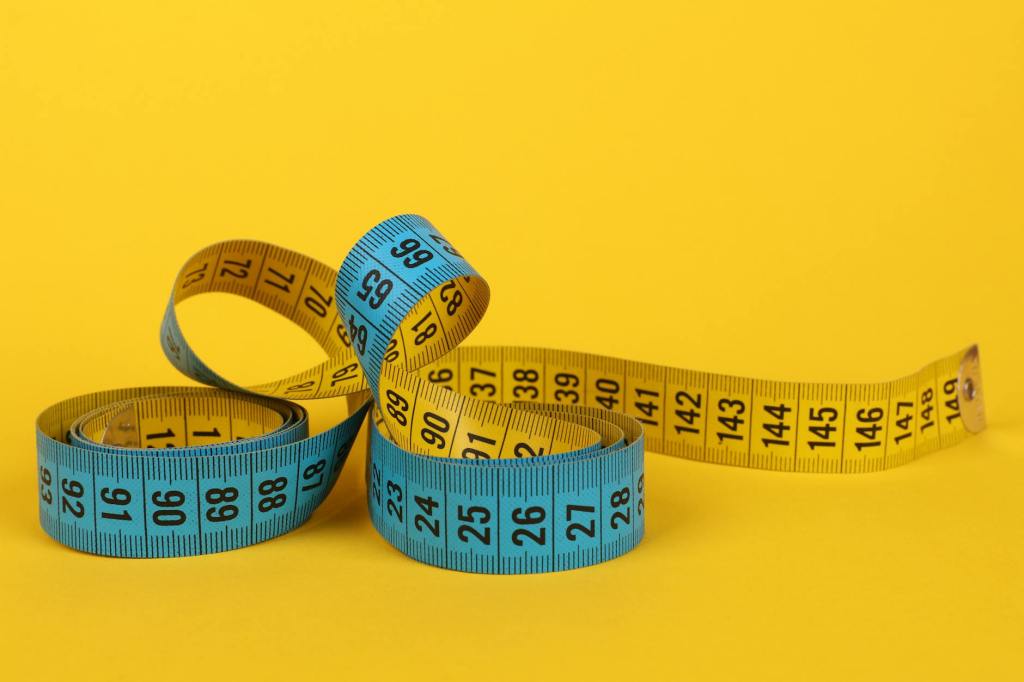
France also adopted the gramme, or gram, to quantify mass, and the litrè (liter) for volume. These units constituted the metric system, now designated worldwide as International System of Units (SI).
The metric is based on the decimal system, and thus neatly divides into quantities of ten. A metre is divided into 100 equal segments known as centimetres–aka centimeters–(cm). In turn, 1 centimetre can be split into 10 smaller segments known as millimetres , aka millimeters (mm).
The English word for “one thousand” translates to French as “un mille.” A metre has 1,000 millimetres, and a kilometre has 1,000 metres.
Pop quiz time! How many millimetres are in a kilometre? It’s elementary! Multiply 1,000 by 1,000 to get the answer of 1,000,000 mm. Or “un mille mille” (one thousand thousand).
The adherence to conformity was imbued in the Jacobin mindset. It was a proto-Communist movement, after all. Each Frenchman was a citoyen, an equal citizen, in the eyes of the law. Thus all things from people to to laws to concepts had to imbued with spirit of equality and equity.
France’s tries to decimalize time, from hours to months to years into units of 10, did not catch on. It was abandoned altogether within a decade during Napoleon’s rule. The rest of the metric system was more popular with the world.
Trivial Trivia and America’s British Heritage
Although oddly enough, scientists and astrologists divide time periods into unit of tens to analyze certain eras. (I, as a second decan Libra, have been familiar with this useless but of trivia since I was 13.)
Like the US Military, the French, and many Europeans run on the twenty-four hour clock. So “3 O’Clock High” here, is “High at 15” there. Despite legalization of a certain green herbaceous plant, that would be considered illegal in the US, no matter what State.
While most nations refer to the metric system as the Standard form, we Americans love to be different. We consider our method as Standard. But if you say this to a non-American, they will tell you it’s the Imperial System. No need for quibbling among friend! One person’s standard is deluxe to another. It’s a relative term.
While American scientists use grams, meters, and liters, most Americans prefer inches, feet, and miles for distance. Weight is measured in pounds and ounces, and volume is measured in teaspoons, tablespoons, cups, pints, quarts, and gallons.

As part of our English heritage, our system is meant to be useful for quotidian needs. An experience cook can easily eyeball 1 tablespoon of a spice by measuring with their hand or palm. The metric equivalent of a tbsp. is 14.175 grams… Even so, I’d need a graduated cylinder to get that precise.
In the past, school teachers wielded long sticks to instill fear among unruly students. We kids from that era are quite familiar with the meter. Those sticks measured a meter on one side and a yard plus extra inches on the other. So why did we call it a yardstick?
Today in History, 1805
In Europe
On this day in 1805 in Vienna, Ludwig van Beethoven conducted the first public performance of his Symphony No. 3 in E♭ major, Opus 55, known as “Eroica Symphony” (or the Erotic Symphony).
Eroica is one of Beethoven’s most celebrated masterpieces. This remarkable work unfolds in four mesmerizing movements. It shatters the boundaries of symphonic form, harmony, and emotional depth. It defined the essence of the new era of classical music. The composition pulsates with energy, marking a monumental transition between the Classical and Romantic eras.
Its cultural importance and emotional impact make it a notable part of music history.
Westward Bound
After The United Stated purchased the Louisiana territories from France, there was a vast American frontier to explore. In 1804 Captain Meriwether Lewis and Lieutenant William Clark began their expedition from Fort Maden, near St. Louis Missouri, in 1804. In 1805 their journey to the West ended when they reached the Pacific Ocean. It would take the pair another year to return home.
There trip would not have been a success without the aid of Sacajawea, a member of the Shoshone tribe. A mother to a young infant, she guided Lewis and Clark on their journey West. Her skills as a narrator were essential. Sacajawea’s knowledge of edible plants and familiarity with the terrain helped Lewis and Clark survive the arduous trek.
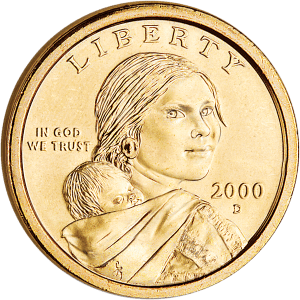
This achievement would be celebrated with countless statues and monuments dedicated in her honor, but many know her image from the 2000 dollar coin.
Susan B. Anthony was not available for comment.
Today in History, 1895
To the Northern North
Fridtjof Wedel-Jarlsberg Nansen was a Norwegian Renaissance man, a scientist, diplomat, humanitarian, philanthropist, a seaman and explorer. In 1895, he sailed into the frozen Arctic, which was not his first into the icy tundra. He had had traveled up North many times before, once being trapped for over three weeks in the frozen waters.
But on this voyage the Norseman was determined the first person reach the furthest parts of Greenland. He strapped on a pair of skis and and ventured into the unknown, determined to succeed or die. (Literally, as his motto was “The West Coast or Death” ).
Nansen’s Viking ancestors would have been proud, as he was the first to get so close to the North Pole. Or at least, the first to return alive to share his tale.
Nansen reached a record northernmost latitude 86°13.6′ N. He didn’t do it alone, though. Two companions were with him, surely one man would have surely frozen to death. To say the weather was frosty would be an understatement!
The journey lasted almost two months. Temperatures reached lows of 45° Celsius. Yet, the steely eyed explorer made it and came back to tell his story.

Of Nansen’s many notable achievements in his life, this historical journey was inconsequential compared to grandest achievement.
In 1922 he won the Noble Peace Prize. Nansen saved 35 million Russians from starving to death after a brutal famine.
 Behind the Times News