The word of the week is “hoard.” It is an interesting word with a rich history and intriguing origins often associated with dragons accumulating treasure in medieval literature.
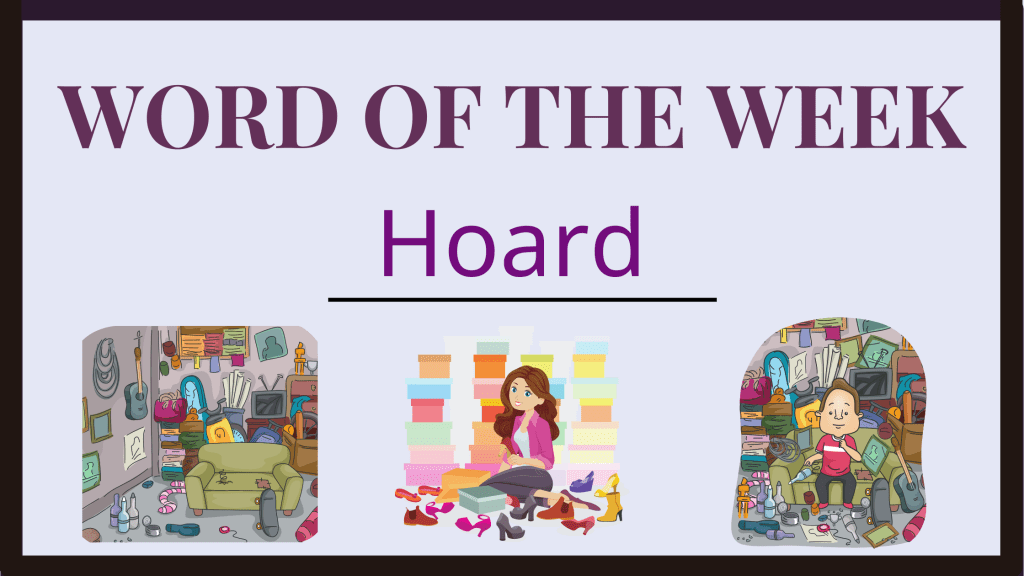
The Word of the Week Is “Hoard”
This week’s word is “hoard.” Hoard is a noun that refers to an extensive collection of something, especially money or other valuable items. It can also be used as a verb to describe the act of accumulating or stockpiling something.
The origins of the word hoard can be traced back to Old English, where it was spelled hord and meant a treasure or storehouse of valuable items. The term is related to the German word hort, which also means a treasure or hoard.
The Etymology of “Hoard”
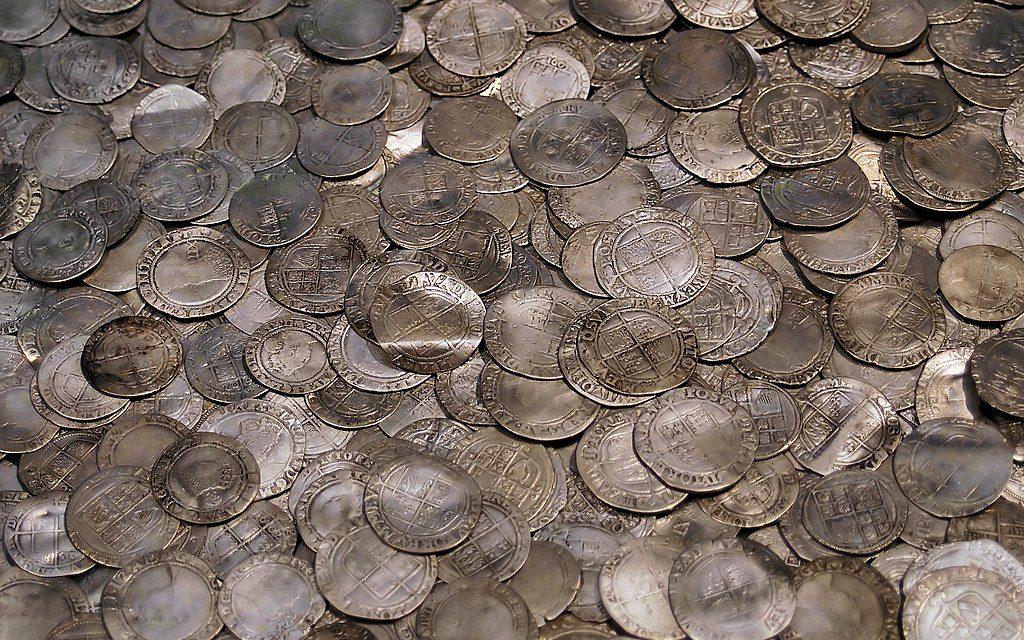
According to Etymology, “hoard” has definitions as a noun and a verb:
Old English hord: “a treasure, valuable stock or store, an accumulation of something for preservation or future use,” hence “any mass of things preserved by being deposited together,” from Proto-Germanic *huzdam (source also of Old Saxon hord “treasure, hidden or inmost place,” Old Norse hodd, German Hort, Gothic huzd “treasure,” literally “hidden treasure”), from PIE root *(s)keu- “to cover, conceal.”
hoard (n.)
Related: hoarded; hoarding. “to treasure up, collect, and store; amass and deposit for preservation or security or for future use,” Old English hordian, from the root of hoard (n.). Cognate with Old High German gihurten, German gehorden, Gothic huzdjan.
hoard (v.)
Hoarding in Literature and Popular Culture

In literature and popular culture, hoards are often depicted as a source of conflict or temptation. For example, in J.R.R. Tolkien’s “The Hobbit,” the dragon Smaug hoards a vast amount of treasure in his lair, which leads to a battle between the dwarves, elves, and men who seek to claim it.
Similarly, in the legend of King Midas, the king’s desire to hoard wealth leads to his downfall when he turns everything he touches into gold.
In the old-school Filmation cartoon, “She-Ra: Princess of Power,” the good guys were known as the Rebellion, while what evil guys were known as, fittingly enough, “The Evil Hoard.” If that wasn’t enough, the ultimate baddie was known as “Horde Prime,” and his red-eyed, snorting flunky was called “Hordak.”

Animal & Other Kinds of Hoarding
One interesting aspect of hoarding is that it can also be used to describe the actions of animals. Many species of animals are known to hoard food in preparation for times when resources are scarce. For example, squirrels will gather nuts and store them in their dens for the winter months. Some species of birds, such as the acorn woodpecker, will store acorns in granaries that they build in trees.

Humans, of course, are the most notorious hoarders. It is a phenomenon observed in many cultures throughout history. For example, the ancient Egyptians were known to hoard gold and other precious metals, which they used to make jewelry and other ornamental objects.
Native American tribes would stockpile food and other resources in preparation for times of drought or other natural disasters.
“To hoard” can also be used metaphorically to describe intangible things accumulated or collected over time. For example, someone might hoard knowledge or experience. This means they have gathered a vast amount of information and expertise in a particular field. In this sense, hoarding can be seen as a positive behavior. Individuals use a wealth of information to hone their skills and gain a better understanding of the universe.
However, if the knowledge that should be relatively easy for most people to understand is intentionally made obscure and indecipherable to “laymen,” this can be a negative form of hoarding. Academics, scientists, and the tech industry have been accused of this in recent years (i.e., “hoarders of knowledge“)
See: argot; obscurantism; sesquipedalian
Modern Associations with Hoarding

Hoard is a word that can be used to describe both positive and negative behaviors. While hoarding can be seen as a symptom of a mental disorder in extreme cases, it can also be a responsible way to prepare for difficult times.
In modern times, the word hoard is often associated with stockpiling objects or possessions. This behavior can be seen in people who have a compulsive need to collect and keep items, even if they have no practical use or value.
This can lead to cluttered living spaces and difficulties in disposing of items when necessary. In extreme cases, hoarding can become a severe mental health issue that requires professional intervention and treatment.
Despite the potential downside of hoarding, there is also a particular fascination with accumulating and amassing valuable items. This is reflected in popular culture, where hoarding is often portrayed as a sign of wealth, power, or status. For example, movies and TV shows usually feature characters with vast collections of valuable art, rare books, or other prized possessions.
Hoarding can be beneficial for humans as it can be for animals. The “prepper” movement is quite widespread and not just for those who believe Doomsday is approaching.
For example, someone might stash extra resources to prepare for a difficult time, such as a natural disaster or an economic downturn. In this context, hoarding can be seen as responsible and proactive behavior.
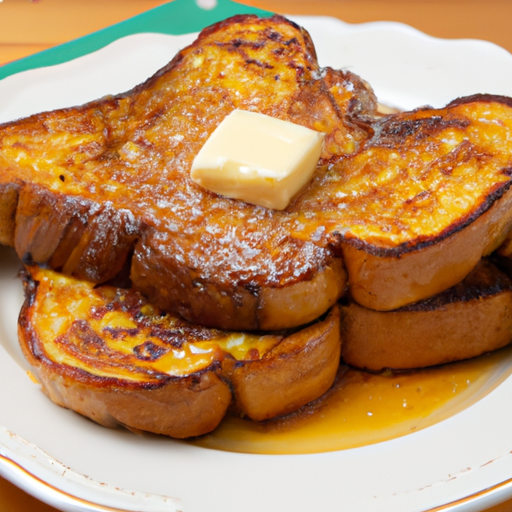
Unless it’s stocking up on milk, bread, and eggs during a hurricane. For some reason, that’s when everyone decides it’s time to make French toast!
Stocking up on toilet paper, batteries, candles, matches, water, canned goods, a can opener, a five-gallon container of gasoline, and a Sea Eagle inflatable makes more sense.
Conclusion
The word hoard is a versatile term that can describe various behaviors and situations. Whether it refers to the accumulation of wealth or the gathering of knowledge, “hoard” is a word that captures the idea of collecting and stockpiling something of value. Usually.

Hoarding can be both positive and negative. It is a behavior that has fascinated people for centuries and continues to be a source of inspiration for writers, artists, and storytellers of all kinds. And misers.
 Behind the Times News